Bowie, Maryland
Egress Window Ladders in Bowie, MD
Egress Window Ladders in Bowie, Maryland, with published price ranges up front, the wall, the well space, and the drainage measured on site, and one written figure before any work begins.
Bowie, Maryland
Egress Window Ladders in Bowie, Maryland, with published price ranges up front, the wall, the well space, and the drainage measured on site, and one written figure before any work begins.
Count the newer wells in Bowie that were built with everything except a way up. The window meets size. The well meets area. Then a person at the bottom faces a smooth wall taller than waist height, with wet gravel underfoot and nothing to grip. We install egress window ladders where depth demands them, turning a deep well from a pit into a route. Kenhill basements, with their grade changes, produce some of the deepest wells in the city.
A ladder sounds like a small finish item. In an actual climb, in the dark, it is the difference between hauling yourself up by your arms and stepping out.
Under the International Residential Code, a window well deeper than 44 inches must have a permanently affixed ladder or steps. That is a code fact, measured from the well floor to the top of the well. Ladders must stay usable with the window fully open, and the code describes rungs at least 12 inches wide, projecting at least 3 inches from the wall, and spaced no more than 18 inches apart vertically.
Those details shape a climb more than homeowners expect. Narrow rungs turn sideways under a shoe, and rungs set too close to the wall leave no room for toes.
Homes built before inspectors looked closely at wells often have depth without the ladder. The omission surfaces at a sale inspection or a bedroom permit.
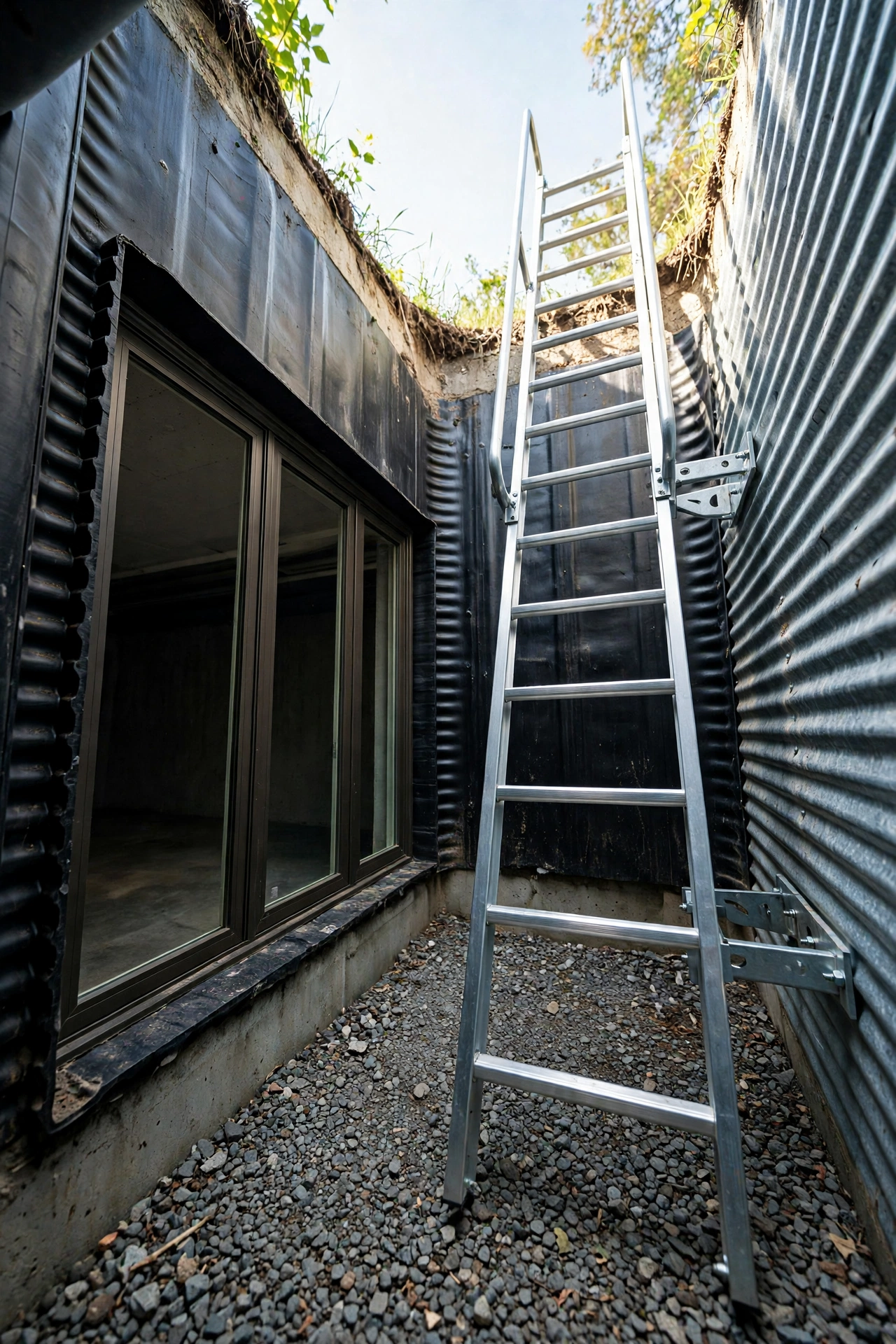
Fixed steel ladders anchor into the well wall or foundation face and suit most metal wells, with galvanized finishes that stand up to damp air at the base. For composite wells, manufacturer matched ladders bolt to reinforced points in the wall, so the plastic never carries loads it was not shaped for.
Wider wells sometimes take steps instead. Molded steps give a surer footing for children and older adults, at the cost of some floor area. That trade gets weighed against the required clear space with the window open.
Placement matters as much as style. A ladder centered under the window blocks the exit path, so we offset it where the well allows. Every ladder gets a test climb before we leave, adult weight, window open.
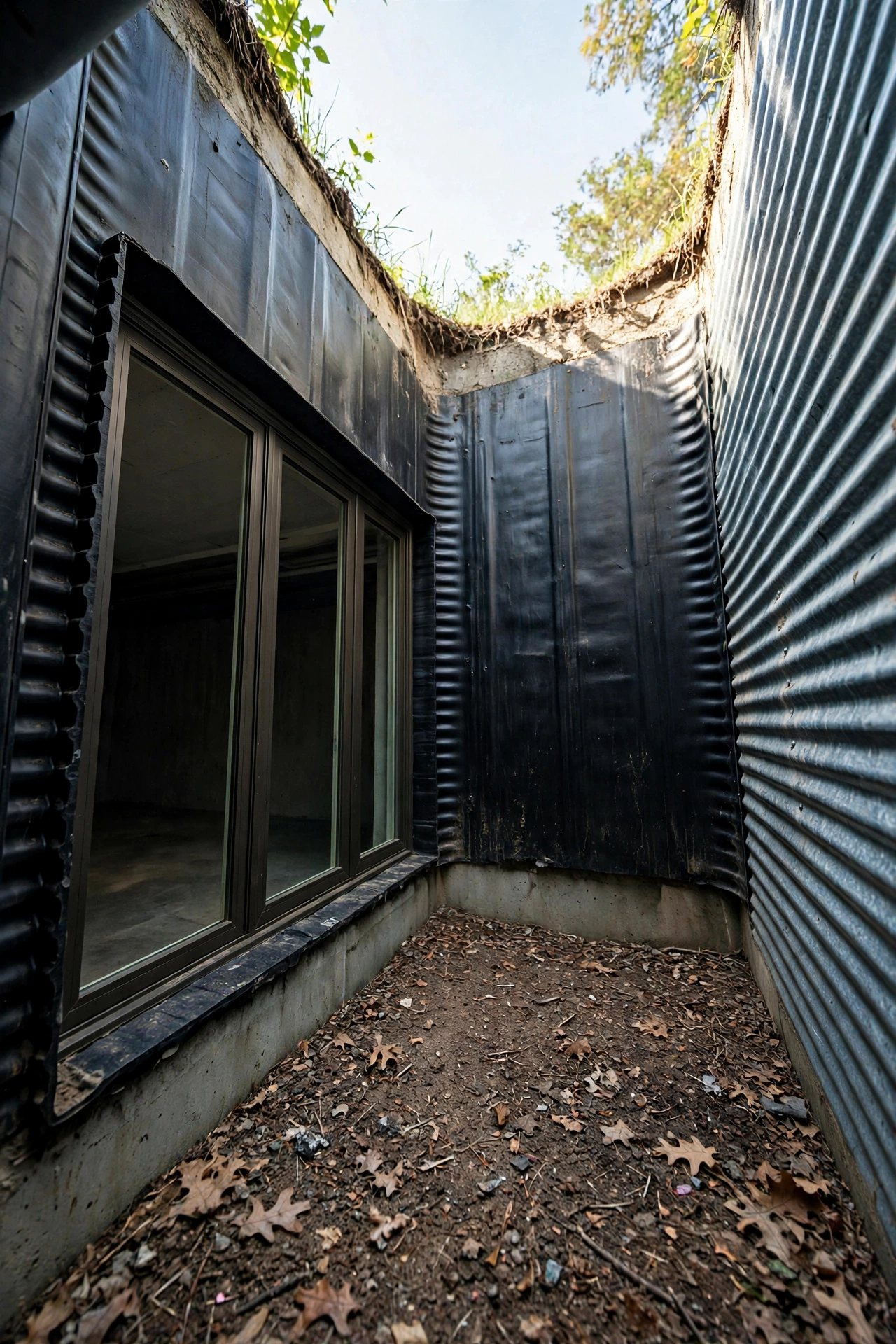
A Kenhill home had a deep egress well with smooth steel walls and no ladder, flagged when the owners prepared to use the basement room as a bedroom for a returning adult child. We fitted a galvanized ladder anchored to the well wall, offset so the window could open completely without striking it. The install finished with a test climb from the well floor by an adult member of our crew.
No Bowie company publishes a local price list, so plan with published figures, labeled as such. Published figures for egress window ladders run $320 to $780 supplied and installed. For comparison, Angi published data puts full egress window installation at $2,723 to $5,877, averaging about $4,229 to $4,236, and HomeGuide published data puts full scope projects with cutting, a well, and drainage commonly at $6,000 to $8,000.
Well depth and wall material set most of the figure. Taller ladders use more material, and composite wells needing manufacturer matched hardware price differently from steel wells.
Our advice after a ladder install is plain. Each person who sleeps in that room should make the climb once in daylight, shoes on, at an easy pace. Knowing the rung spacing removes the search from a night when searching costs time.
Keep the route honest afterward. Storage creeps into wells, so the floor and ladder face should stay clear the way a hallway stays clear, because that space is a hallway, just a vertical one.
Use the quote form at the bottom of this page and tell us the depth of your well if you know it, and what the well is made of. Send the form and we will arrange a fitting visit.
Published figures put supplied and installed ladders at $320 to $780. Depth, wall material, and matched hardware for composite wells set the place inside that range.
Code facts require a ladder or steps in wells deeper than 44 inches, measured from the well floor to the top of the well.
Yes, in most cases, when the wall is sound. A rusted or cracked wall may need repair first so anchors hold.
Steps give a broader, surer footing and many families prefer them. They use more floor space, so sizing checks the required clear area first.
It should not. Ladders are positioned and tested with the window fully open, since code requires them usable in exactly that condition.
Galvanized steel is the common choice and resists the damp well environment. Composite matched ladders do not rust at all.
Tell us about your basement and the window you have now. We read every request that comes in and respond with the published range for that kind of work and the next step, starting with a visit to measure the wall, the well space, and the drainage.
Prefer to talk it through first? Send the form and we will call you back at the number you give us.