Egress Window Well Replacement in Bowie, Maryland, with published price ranges up front, the wall, the well space, and the drainage measured on site, and one written figure before any work begins.
Egress Window Well Replacement in Bowie, MD by Bowie Egress Windows Company
Rust rarely announces itself politely. A galvanized well in Bowie can look sound from the basement window for years while its lower wall thins, bulges under soil pressure, and finally gives way during a wet spring. We replace egress window wells that have corroded, shifted, or shrunk below code size, keeping the existing window where it is sound. Chapel Forge ranches and older Belair homes supply much of this work, since many of their wells date from the original build.
Replacement differs from a fresh install in one respect: the drainage history is already there to read, and a stained wall tells us where water sat.
Signs a Well Has Reached the End
Flaking metal at the base is the clearest warning. Soil showing through a rusted seam, a wall that leans or bows, and standing water that lingers days after rain all point the same way.
Size can condemn a well even when the metal survives. Under the International Residential Code, wells need at least 9 square feet of horizontal area and a minimum dimension of 36 inches, and wells deeper than 44 inches need a ladder or steps. Plenty of older Bowie wells were sized for ventilation, not escape, so replacement is the moment to correct the dimensions.
Cosmetic patching seldom holds. Sealant over rusted steel hides the hole while corrosion continues behind it.
What Replacement Involves at the Foundation
Work begins outside, with excavation wide enough to free the old unit and inspect the wall behind it. Removing a corroded well often reveals why it failed: clay packed backfill, or a drain line never connected. We clean the foundation surface and check the window frame for moisture damage.
The new well anchors to the foundation at a rim height that sheds yard water, and backfills in compacted lifts. Gravel at the base restores the drainage layer, tied into the existing sump or exterior drain where the home has one.
Because a well attaches to the foundation, projects of this scope in Bowie fall within Prince George's County DPIE permitting in general terms as a market fact for home improvement work.
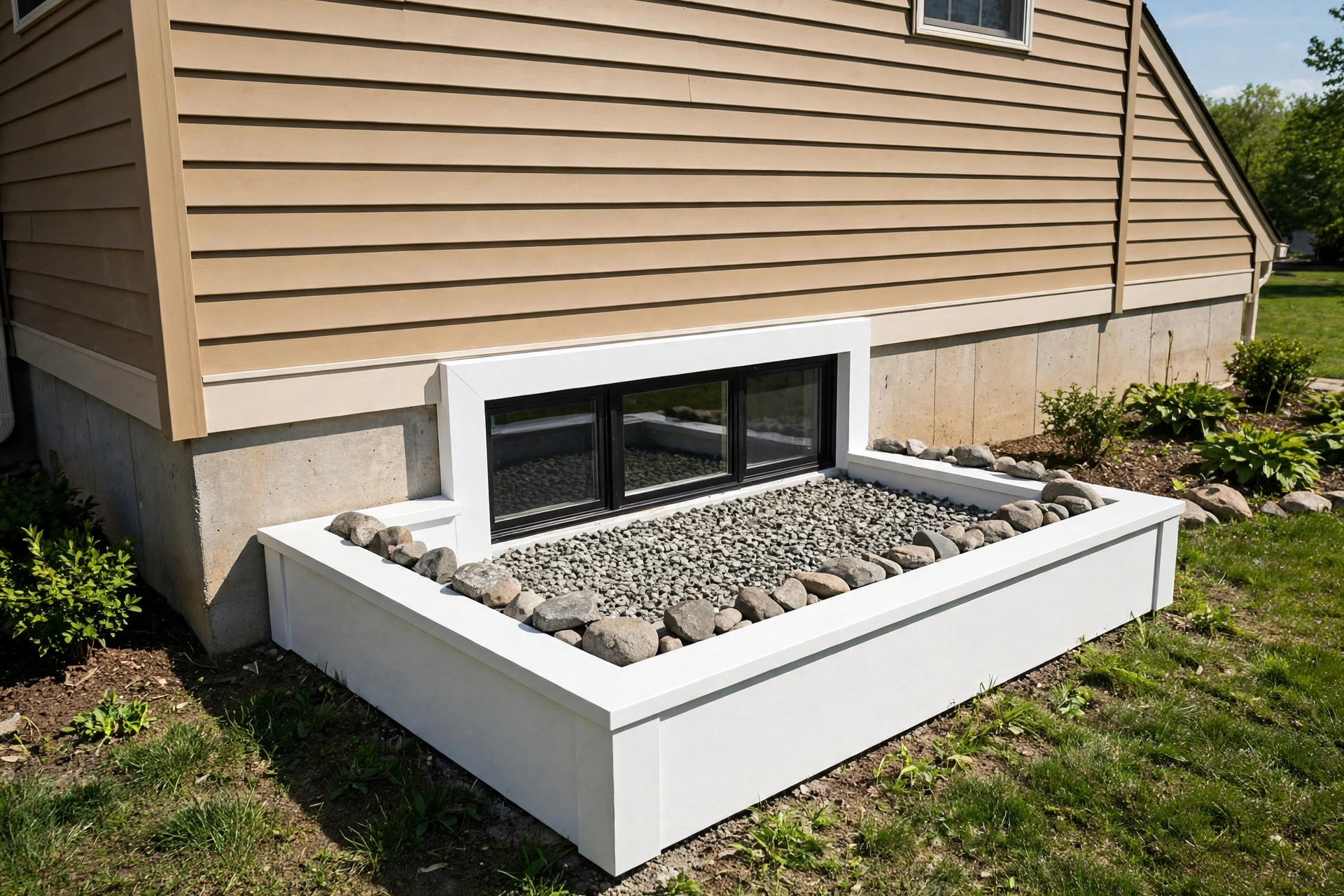
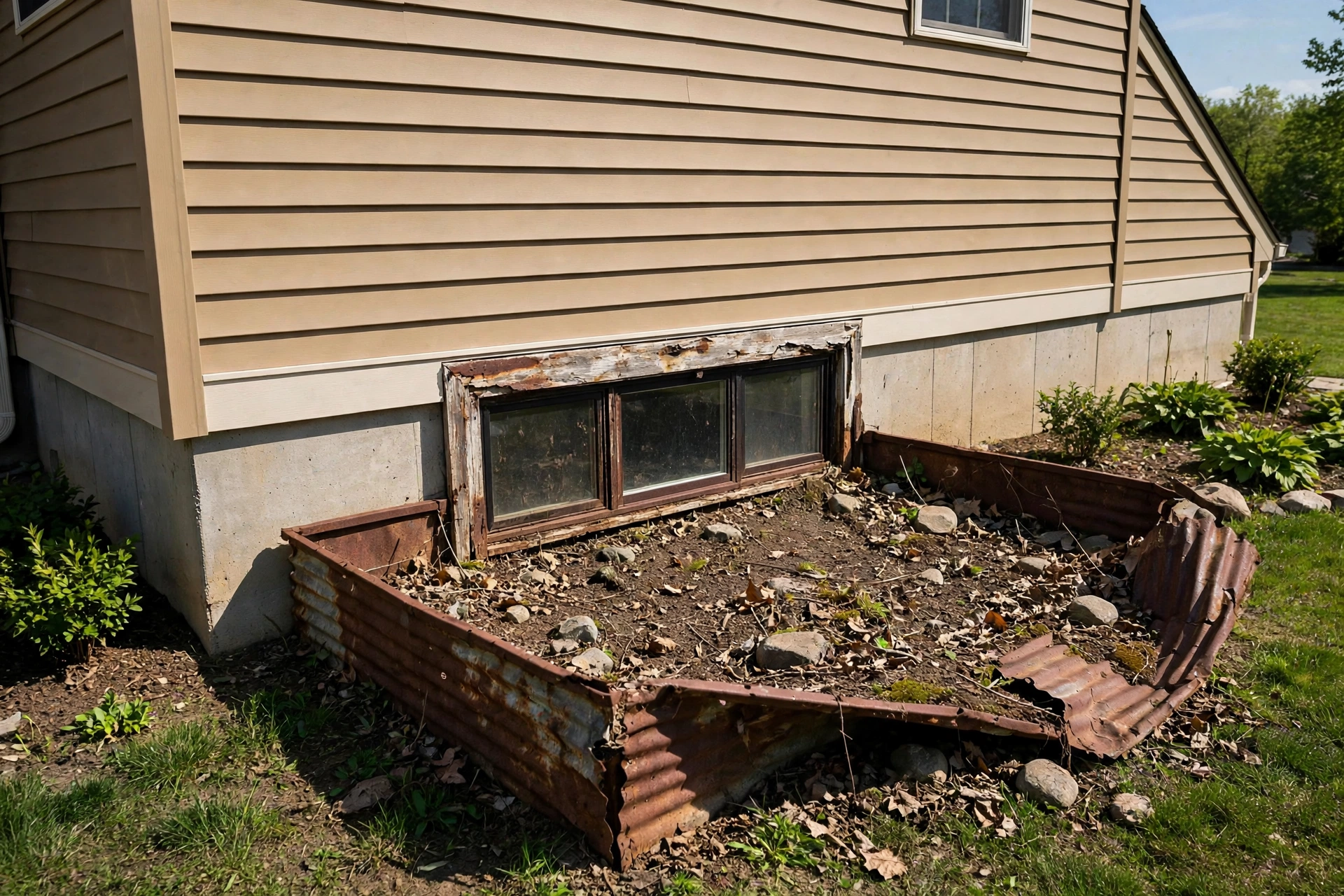
Recent Project: Egress Window Well Replacement in Chapel Forge
BEFOREAFTER
A Chapel Forge home had a galvanized well rusted through at its base, with soil pushing in and water standing against the window after storms. We removed the failed unit, cleaned the foundation face, and fitted a composite replacement well sized to current code dimensions with fresh gravel drainage at its base. The rim was set to shed yard water and backfill was compacted and regraded.
Turnaround
Two days on site.
Final Price
$1,240
Egress Window Well Replacement Cost in Bowie, MD
No Bowie company publishes a local price list, so the figures here are published figures, labeled as such. Published figures for egress window well replacement run $950 to $2,200, covering removal of the failed unit and a new well set and drained. For wider context, Angi published data puts egress window installation at $2,723 to $5,877, with an average of about $4,229 to $4,236, and HomeGuide published data puts full scope projects with cutting, a well, and drainage commonly at $6,000 to $8,000.
Access moves a replacement quote most. A well beside open lawn digs quickly. One tucked under a deck takes longer to reach, and enlarging an undersized well adds excavation.
Why We Size the Replacement for the Code, Not the Old Ring
Matching the footprint of a failed well feels efficient, and it is the wrong instinct when the original was built for a hopper vent. Replacement is a rare open wall moment, with drainage and grade exposed at once, so correcting size and drain path then costs far less than returning later.
Material gets a fresh look too. Homes where galvanized steel rusted early often suit composite better, given damp soil. Drier lots may favor steel for strength.
Request an Egress Window Quote in Bowie, MD
Tell us on the quote form at the bottom of this page what the current well is doing: rust, standing water, or a size an inspector flagged. Add a note on yard access, and we will follow up to schedule a measuring visit.
Frequently Asked Questions
How much does egress window well replacement cost in Bowie, MD?
Published figures put replacement at $950 to $2,200, including removal of the old unit. Access, enlargement, and drainage repairs set the place inside that range.
Can the existing window stay during a well replacement?
In many cases yes. If the window meets code rules and its frame survived the moisture, the work stays outside at the well.
How long does a replacement well last?
A composite well in drained soil can serve for decades, and steel lasts well where soil stays drier. Base drainage extends the life of either.
What happens to the soil and plantings around the well?
Excavation disturbs a working margin around the unit. We backfill, compact, and regrade that area, though plantings tight against the rim may need moving first.
Does a bigger replacement well require cutting the foundation?
No. The well sits in excavated ground outside the wall, so cutting only enters the scope if the window opening itself must change.
Why did the original well rust from the bottom up?
The base sits in the wettest soil. Poor drainage keeps that zone damp year round, so corrosion starts low and climbs.
Get Your Egress Window Quote
Tell us about your basement and the window you have now. We read every request that comes in and respond with the published range for that kind of work and the next step, starting with a visit to measure the wall, the well space, and the drainage.
Prefer to talk it through first? Send the form and we will call you back at the number you give us.