Bowie, Maryland
Egress Window Wells in Bowie, MD
Egress Window Wells in Bowie, Maryland, with published price ranges up front, the wall, the well space, and the drainage measured on site, and one written figure before any work begins.
Bowie, Maryland
Egress Window Wells in Bowie, Maryland, with published price ranges up front, the wall, the well space, and the drainage measured on site, and one written figure before any work begins.
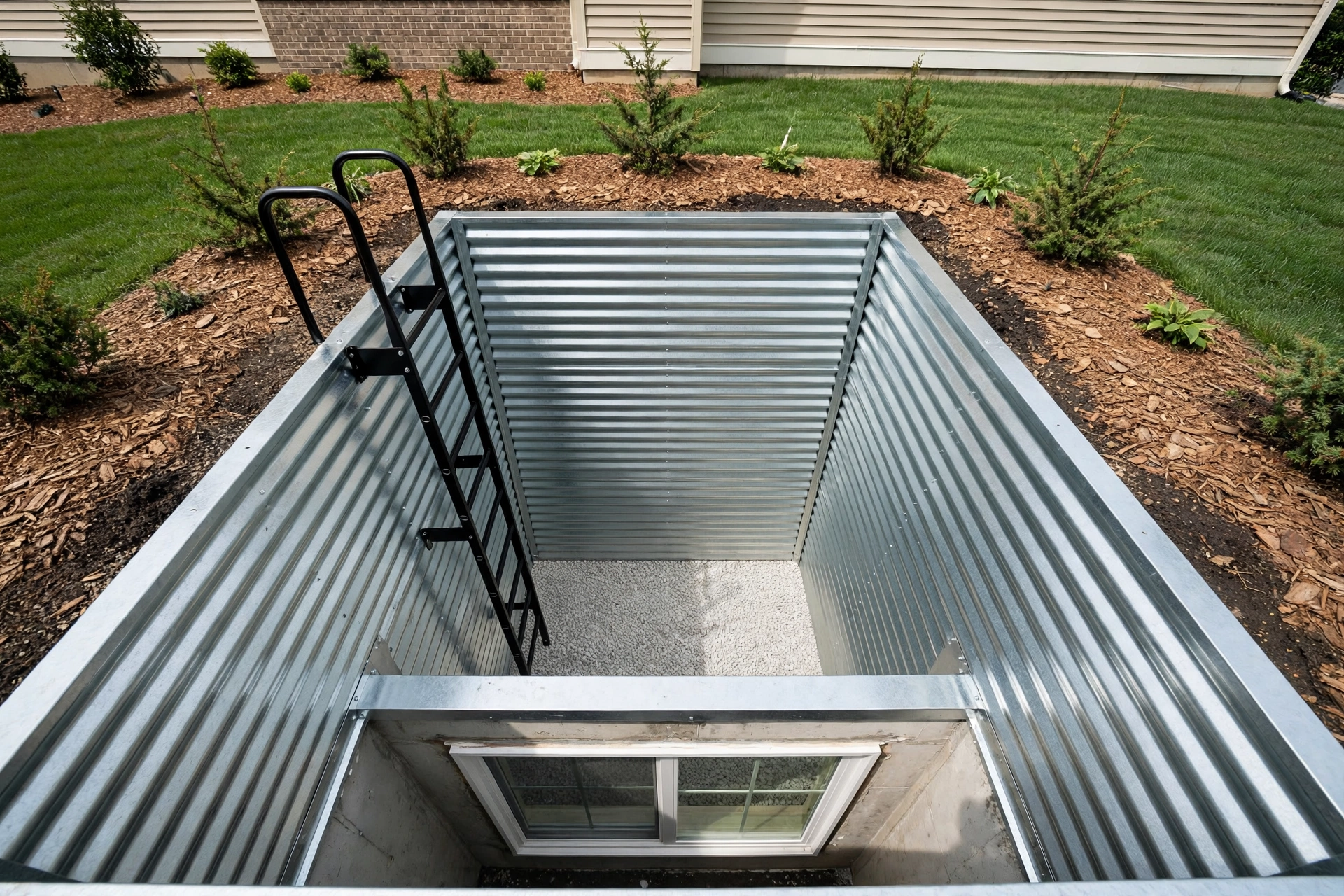
A basement window can meet every opening rule and still fail in an emergency if the ground outside it gives a person nowhere to stand. We build egress window wells in Bowie with room to climb out, room for the window to swing fully open, and a floor that drains instead of filling during a storm.
Clay soil does much of the damage here. It holds water against the foundation, and shallow metal rings settle until their rims sit below grade, so rain runs inward rather than away.
Under the International Residential Code, a window well needs a horizontal area of at least 9 square feet and a minimum horizontal dimension of 36 inches. Those numbers are code facts, not extras. Space must stay clear with the window completely open, because an escape route that only works with the sash half closed is not an escape route at all.
Depth changes the build. Wells deeper than 44 inches need a ladder or steps under that same code section, usable while the window stands open. Grading matters too: soil should shed water away from the opening, and the floor needs a drainage path so the bottom never becomes a pond against the glass.
Excavation opens enough room to work around the well, not just inside it. That space lets us set the unit level, anchor it to the foundation, and backfill in compacted lifts so it does not tilt after its first wet season. Utility lines are located before digging starts.
Drainage gets decided before the well goes in. Some Bowie homes drain the well floor to an interior sump system. Others suit a gravel bed tied to exterior drainage where grade allows. Either route beats a sealed bottom. We finish with washed gravel at the base and a check that the window opens fully.
Work around a foundation opening in Bowie sits within Prince George's County DPIE permitting as a market fact for work of this scope, in general terms.
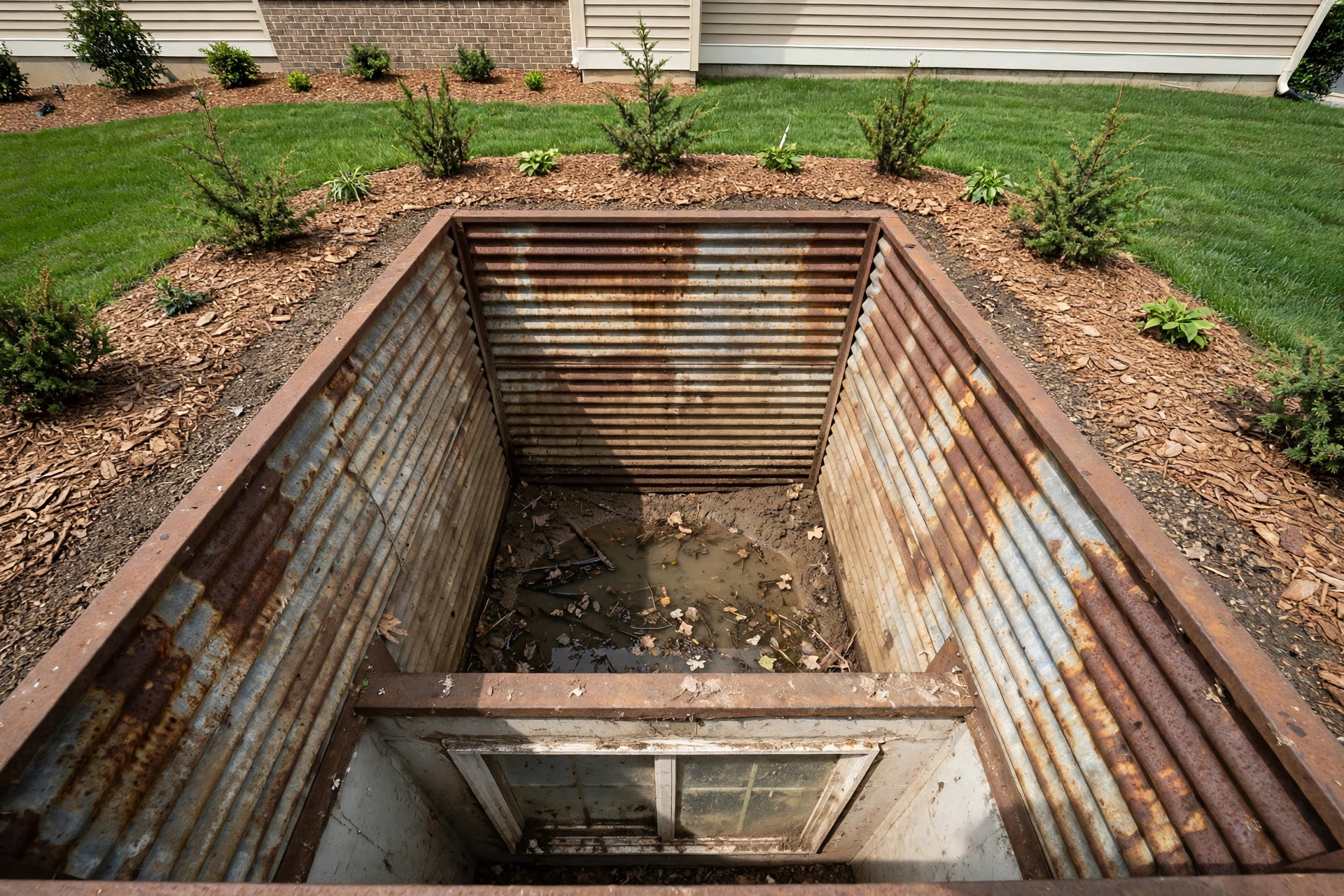
A White Marsh home had a code sized egress window opening onto a shallow steel ring that had settled below the lawn and collected water after heavy rain. We removed the failed ring and set a deeper steel well anchored to the foundation, with a gravel base drained toward the sump system. Backfill was compacted in lifts and graded away from the rim, and the window was tested fully open.
No Bowie company publishes a local price list, so plan from published figures, labeled as such. Published figures for egress window wells run $1,850 to $3,900 for the well itself, set and drained. For context, Angi published data puts full egress window installation at $2,723 to $5,877, averaging about $4,229 to $4,236, while HomeGuide published data puts full scope projects with cutting, a well, and drainage commonly at $6,000 to $8,000.
Depth drives much of the spread. A shallow well on open grade prices lower than a deep dig beside a finished patio. Drainage route, material, and regrading at the rim each move the figure once the site has been seen.
First we measure the opening and the depth from sill to grade, since those numbers decide well size and whether a ladder enters the scope. Next comes the drainage conversation, held before digging. A handsome surround over a sealed floor still holds water, so the exit path for rain ranks ahead of the finish.
Last, we test the route the way someone would use it at night. The window opens completely. Knees and shoulders clear the sides.
Use the quote form at the bottom of this page and tell us the window location, the rough depth to the yard, and whether water collects outside that window. We will follow up to arrange a site visit.
Published figures put egress window wells at $1,850 to $3,900 set and drained. Depth, drainage route, and material set your place inside that range.
Code facts call for at least 9 square feet of horizontal area and a minimum dimension of 36 inches, usable while the window is fully open.
Usually yes. Rain falls directly into an open well too, and a gravel base with a drain path keeps it from standing against the window.
Often it can, provided the opening meets code size and sill height rules. The visit checks the window first, then sizes the well.
Composite resists rust longest in wet ground, while steel offers strength in tight spaces. Soil moisture decides the better pick.
A larger, lighter colored well usually brightens the room, since more glass sits above open space.
Tell us about your basement and the window you have now. We read every request that comes in and respond with the published range for that kind of work and the next step, starting with a visit to measure the wall, the well space, and the drainage.
Prefer to talk it through first? Send the form and we will call you back at the number you give us.